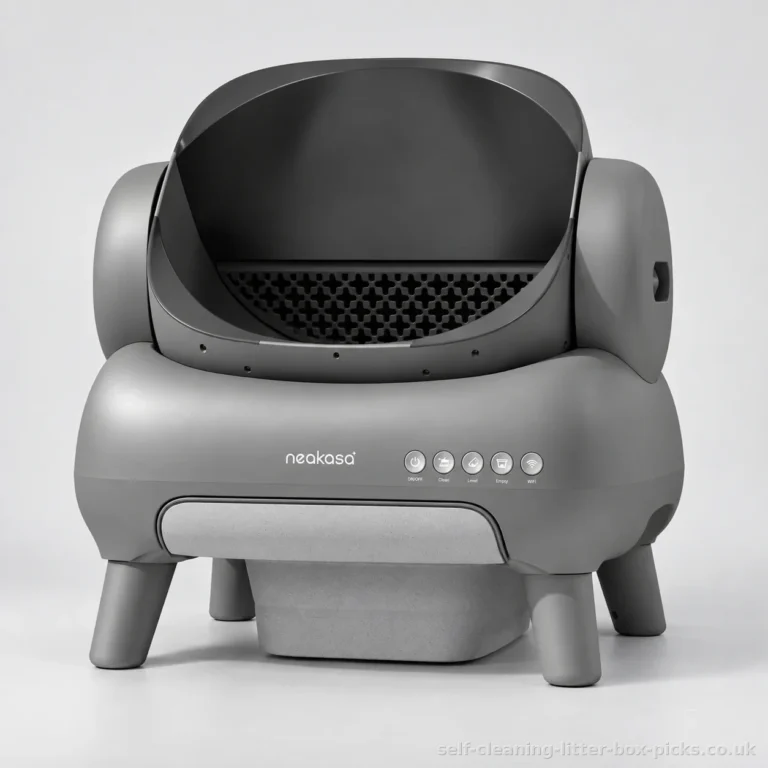
Making the right choice
Between getting home from work and feeding the cat, scooping waste remains a regular chore. Our selection of automatic litter box models helps you compare options to make this routine easier.
Our first guides on this topic are coming soon.
How does an automatic litter box change your daily routine?
How does an automatic litter box change your daily routine?
To choose the right automatic litter box, start with the benefit you want: reducing manual waste scooping while keeping a litter box that suits your cat. The device separates waste automatically, but you still need to dispose of the collected waste, replace the litter and wash the parts specified in the instructions.
How it works varies by model. The PetSafe ScoopFree Ultra uses a rake to move waste into an enclosed compartment 20 minutes after your cat uses it. Its removable tray is disposable. The Litter-Robot 3 Connect separates waste from clean litter by sifting. The PetSafe Simply Clean moves it into a covered bin using a conveyor.
- Automatic waste separation reduces manual scooping.
- You still need to empty the waste compartment.
- The litter box still needs washing.
Which households could benefit from this equipment?
A self-cleaning litter box is worth considering if daily scooping feels like a chore or several cats use your litter boxes. It can make this routine easier, provided you remain available to monitor its operation and maintain it. It does not replace the time you need to spend caring for your pets.
Your cat’s comfort comes before automation. Check the interior space, access and available room in your home. The label “XXL automatic litter box” alone does not guarantee that a large cat can turn around comfortably. External dimensions do not tell you how much usable space there is inside.
Keep the familiar litter box accessible during the transition. In a household with several cats, buying an automatic device is not, on its own, a reason to remove the other litter boxes.
Our selection covers a range of price points and includes the PetSafe ScoopFree Ultra. Several mid-range models offer different options to consider. Factor compatible consumables into your budget, as their cost is not specified here.
What can you expect in terms of odour control?
Moving waste into an enclosed compartment can reduce its exposure in the litter box. Several features serve this purpose: the sealed drawer in the PetSafe ScoopFree SmartSpin, the carbon filter in the Litter-Robot 3 Connect or the fragrance diffuser box in the PawHut D31-124V91WT.
These features do not all work in the same way. Adding fragrance does not mean eliminating the source of odours. Emptying, washing and the litter used remain key factors. Retailer listings claim reduced odours, but the information provided does not allow a comparison of their actual effectiveness.
What is a litter box app actually useful for?
An app can make monitoring easier. The Litter-Robot 3 Connect app lets you receive a notification when the waste drawer is full and start a cycle, among other features. The PetSafe SmartSpin app provides information on weight and litter box usage.
This data helps you observe habits; it does not provide a veterinary diagnosis. Connectivity comes second to comfort and safety.
Browse the selection on this page to compare devices according to your priorities. Our analyses are based on the retailer listings provided, with no physical handling or aggregated feedback available. The caveats highlighted will help you identify what to check before buying.
How do you choose an automatic litter box that suits your cat?
To choose the right automatic litter box, first check safety, the space available for your cat and the consumables required. The app comes next. A device that removes waste reduces scooping, but you will still need to empty the waste compartment and clean the tray.
How can you check that it is safe for your cat?
Ask for the manual for the exact model before buying. It should specify weight and age limits, how the cat is detected and how the mechanism behaves if the cat returns during cleaning.
- What is the minimum weight required for cat detection?
- Does the movement stop if the cat enters during a cycle?
- Under what conditions does cleaning resume?
- How can you report or resolve a detection fault?
The PawHut D31-124V91WT lists 12 sensors and anti-pinch protection; the UBPet C20 lists 9 sensors. The number of sensors does not establish safety. The supplied specifications do not state detection thresholds or all the conditions that trigger a stop. Especially for a kitten, insist on this information before choosing.
Will your cat have enough room?
Distinguish between the external dimensions, internal dimensions, opening and entry height. A bulky device does not guarantee that your cat will be able to turn around comfortably. Ask for internal measurements if they are missing.
The PawHut D31-124V91WT lists a recommended maximum weight of 5 kg. The UBPet C20 is advertised for cats weighing up to 10 kg, with an entry height of 17,4 cm. These details help narrow down the options, but do not guarantee comfort for every body shape or accessibility for a cat with limited mobility.
The dimensions listed for the Litter-Robot 4 differ across the supplied data. Confirm those of the specific model being sold before setting aside space for it. Also allow room to pull out the drawer and remove components. During setup, keep the usual litter box accessible throughout the transition.
Which litter suits the chosen mechanism?
The manual must confirm the compatible litter material. Do not buy a device assuming it will accept your current litter. Check the permitted materials, exclusions and any specific refills required.
- The ScoopFree Ultra uses a rake and a removable, disposable tray that comes ready to use. Check the availability of replacement trays.
- Litter-Robot models separate waste by sifting. The supplied excerpts do not detail the permitted litter materials.
- The Simply Clean moves waste into a covered bin using a conveyor.
The SmartSpin product information states “any litter”. This marketing claim needs confirmation in the manual, particularly for your usual clumping or plant-based litter. The available data does not support a universal recommendation for granule size.
What maintenance will you still need to do at home?
Assess the manual tasks that remain as well as the automatic cleaning. Check drawer access, disassembly steps, washable components and spare parts availability. Also ask which bags, filters or deodorisers are essential.
The SmartSpin advertises up to 2 weeks of effortless cleaning. This promise does not guarantee how often you will need to empty it at home, particularly with several cats. Capacities and the conditions under which the devices can run unattended are not documented well enough to compare them on this point.
For odour control, distinguish between waste containment and fragrance. The SmartSpin has a sealed drawer; the Litter-Robot 3 Connect advertises a carbon filter; the PawHut D31-124V91WT includes a fragrance diffuser box. These features do not demonstrate equivalent effectiveness. No acoustic measurements have been supplied that would identify the quietest model either.
How much should you budget beyond the purchase price?
The ScoopFree Ultra is included in this selection.
The listed models are grouped to help organise your search. These groupings describe the selection without ranking the models by quality.
A search for a “cheap automatic litter box” should factor in the total cost: purchase, litter, disposable trays, bags and any refills. These prices are missing here; no reliable annual cost can be calculated. Finally, check the warranty, after-sales service and return conditions after use.
Which models should you shortlist based on your priorities?
Our analysis is based on the retailer listings provided, with no hands-on assessment or aggregated reviews available. The comparison helps identify documented features and information to request.
| Model | Listed price | Weight | Dimensions | Size |
|---|---|---|---|---|
| PetSafe ScoopFree Ultra | Check the retailer for the price | N/A | . x . x . | N/A |
| PawHut D31-124V91WT | Check the retailer for the price | 11,5 kilograms | 55,5L x 51W x 60H centimetres | 55.5 cm x 51 cm x 60 cm |
| PawHut D31-158V90WT | Check the retailer for the price | 8.8 kg | N/A | N/A |
| Petree Cube v2 | Check the retailer for the price | N/A | N/A | N/A |
| UBPet C20 | Check price at the retailer | 7,5 | N/A | N/A |
| PetSafe ScoopFree SmartSpin | Check price at the retailer | 11,8 kilograms | 53,1L x 49W x 67,1H centimeters | One size |
| Trixie XL Self-Cleaning Litter Box 40042 | Check price at the retailer | 8,52 kilograms | 63L x 51W x 57H centimeters | XL |
| Litter-Robot 3 Connect | Check price at the retailer | 11,5 kilograms | 68,6L x 61,6W x 75H centimeters | One size |
| Litter-Robot 4 | Check price at the retailer | 24 pounds | 68,6L x 56W x 75H centimeters | Litter-Robot 4 bundle |
| PetSafe Simply Clean | N/A | N/A | N/A | N/A |
For a large cat, the UBPet C20 is worth considering thanks to its size and access specifications. The Trixie XL highlights a large opening, but its interior space still needs to be confirmed.
For connected monitoring, the SmartSpin records weight and usage; Litter-Robot models offer monitoring features through Whisker. These data help track habits without providing a veterinary diagnosis. The PawHut D31-124V91WT supports control through Tuya.
The information available for the PawHut D31-158V90WT and Petree Cube v2 remains too limited for a specific recommendation. The Simply Clean has documentation on its conveyor, but its price is missing.
Mistakes to avoid
- Confusing external dimensions with usable space.
- Choosing solely based on the app or the number of sensors.
- Overlooking consumables and regular cleaning.
- Removing the familiar litter box immediately.
Key takeaways
Prioritize a device that suits your cat and is easy to maintain. If safety, compatibility or dimensions remain unclear, ask for the manual before ordering.
What should you know before switching to an automatic litter box?
What is the best litter for an automatic litter box?
The best litter is the one approved in your device’s manual. Compatibility depends on the separation mechanism and the tray used: do not choose clumping litter based on its label alone. For the PetSafe ScoopFree SmartSpin, the retailer’s listing claims “any litter”, a statement to clarify before buying. The ScoopFree Ultra uses a ready-to-use removable disposable tray. Check compatible litter materials and consumables for the exact model.
What is the best automatic litter box?
The best automatic litter box is the one that suits your cat’s size, your maintenance requirements and your home. When comparing automatic litter boxes, prioritise documented usage limits over the number of features. The PawHut D31-124V91WT lists a recommended maximum weight of 5 kg; the UBPet C20 states suitability for cats weighing up to 10 kg. Our analysis is based on the retailer listings provided, with no physical handling or aggregated feedback available to compare their reliability.
What is the best self-cleaning litter box for a large cat?
For a large cat, prioritise usable interior space and ease of access, then check the weight limit. The UBPet C20 is worth considering: its listing states suitability for cats weighing up to 10 kg and an entrance height of 17,4 cm. However, these specifications do not guarantee that your cat will be able to turn around comfortably. Ask for the internal dimensions. For the Litter-Robot 4, the external dimensions provided are contradictory and need to be confirmed before buying.
What is the best self-cleaning litter box for multiple cats?
For multiple cats, the best litter box is one whose space, waste management and access suit every cat. The UBPet C20 claims to identify 6 cats, but this feature does not indicate how often it needs emptying. The Litter-Robot 4 listing mentions use by 4 cats, without guaranteeing that they will share the box comfortably. Keep other litter boxes accessible during the transition and decide whether to retain them based on your cats’ habits.
Is an automatic litter box suitable for a kitten?
An automatic litter box is only suitable for a kitten if its manual explicitly permits use at the kitten’s age and weight. The listings provided do not specify the minimum thresholds needed to confirm suitability. The 12 sensors advertised for the PawHut D31-124V91WT or the 9 for the UBPet C20 are not enough to establish safety. Before enabling automatic operation, check the minimum weight, detection and cycle stopping. If this information remains unavailable, keep using a conventional litter box.
How do you get a cat used to an automatic litter box?
Introduce your cat gradually, keeping its usual litter box accessible and avoiding forcing it inside. Place the new device somewhere quiet and accessible, and let your cat explore it without triggering movement nearby. If the manual allows it, delay activating automatic cleaning during this familiarisation period. Keep using your cat’s usual litter only if it is compatible with the device. Wait until your cat uses it regularly before considering moving or removing the old box.
Does a self-cleaning litter box still need cleaning?
Yes, a self-cleaning litter box automates waste separation, but it still needs emptying and cleaning. Depending on the model, you will need to empty the drawer, replace a disposable tray, top up the litter and wash the parts permitted by the manual. The PetSafe ScoopFree SmartSpin advertises up to 2 weeks of effortless cleaning: this marketing claim does not establish a universal maintenance interval. In particular, check drawer access and ease of disassembly before choosing.
How much should you budget for an automatic litter box and its consumables?
The models listed include the PetSafe ScoopFree Ultra, PawHut D31-124V91WT and Litter-Robot 4. Factor in compatible litter and any model-specific bags, filters or refills on top of the purchase price. A reliable annual cost cannot be calculated from the available data. Also check spare parts, the warranty and the return policy for used products.