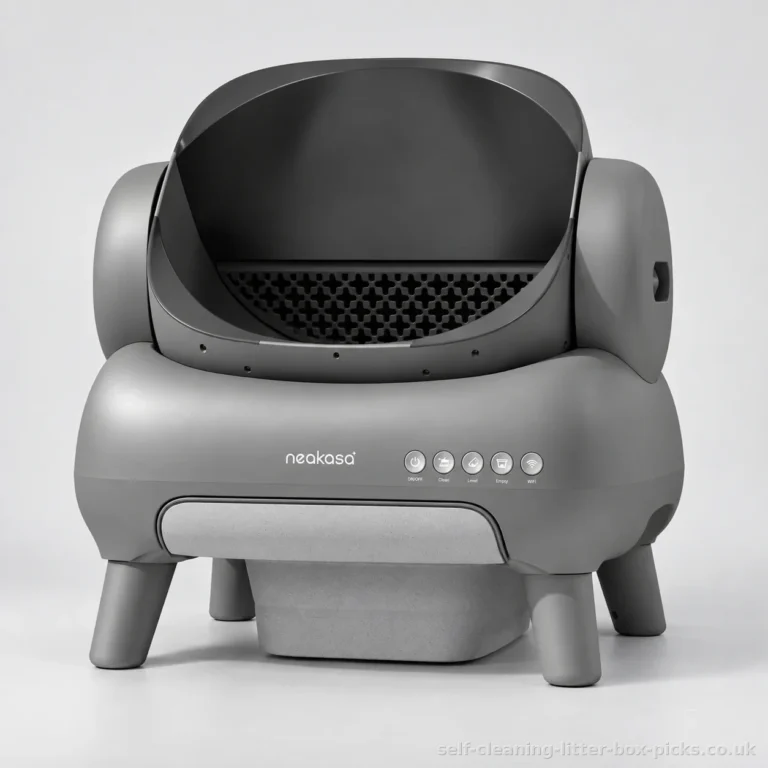
Setup and use
From entry-level to high-end models, focus on comparing the mechanism, access and maintenance of an automatic litter box. Connected features alone do not make a device better suited to your cat.
Our first guides on this topic are coming soon.
What difference does an automatic litter box make day to day?
What difference does an automatic litter box make day to day?
Installing and using an automatic litter box lets you automate waste separation after your cat uses it. Its main benefit is to reduce manual scooping. However, you still need to monitor the tray’s cleanliness, empty the collected waste and maintain the appliance.
How it works depends on the mechanism. La Ferme des Animaux describes a rake system that separates clumps from clean litter and moves them into a receptacle. The guide from Toilettes de Minette also covers drum and globe models. These descriptions cover different designs; they do not replace the instructions for your chosen model.
Day to day, automation can ease a repetitive chore and help keep the area clean between your maintenance routines. However, it guarantees neither odour control nor reduced litter consumption. Results depend in particular on compatible litter, how the tray is used and how regularly you maintain it.
When is this equipment worth considering?
This type of appliance is worth considering if scooping feels like a chore but you can handle the other tasks. The right choice depends as much on your cat as on your routine. An appliance that is convenient for you must also be accessible and acceptable to your cat.
- You have a busy routine and want to automate waste separation while continuing to check it regularly.
- You have a stable, accessible location with enough clearance to remove the drawer and clean the relevant components.
- You can arrange a gradual transition while keeping the old litter tray available.
- You are willing to check consumables and ensure the appliance is working properly, even when cleaning starts automatically.
If you have several cats, check that the instructions allow for this use. The appliance does not remove the need to maintain suitable access that fits your household’s routines. A cat wary of noises or movement may not accept it: keep a familiar option available during the transition.
What drawbacks should you accept before buying?
The budget extends beyond the initial purchase. This observation relates to a limited range and does not represent the entire market. Factor in compatible litter, bags and, depending on the appliance, replacement filters or parts.
The space required also deserves your attention. Allow room for both the appliance and the tasks involved in using it. Cleaning removable components may take more planning than cleaning a basic tray. Check how accessible they are, the availability of parts and the return conditions before ordering.
Finally, automatic does not mean maintenance-free. A full drawer can still be a source of odours. Movement can unsettle some cats, and a blockage requires intervention. Do not buy this equipment expecting to eliminate all monitoring or guarantee your cat will accept it.
The selection on this page helps you continue comparing options with these practical constraints in mind. To get the most from an automatic litter box comparison, prioritise access for your cat, documented safety provisions and ease of maintenance over connected features.
How do you choose an automatic litter box that is easy to use?
To set up and use an automatic litter box with peace of mind, first choose a model suited to your cat and your home. Then check litter compatibility, maintenance requirements and setup instructions. Connected features come after access to the box and documented detection systems.
How do you choose a model suited to your cat?
Before buying, consult the manual rather than relying on photos alone. Check age and weight restrictions, entry height and usable interior space. Your cat should be able to enter, turn around and dig freely. For a cat with limited mobility, pay particular attention to the entrance.
If you have several cats, check that each meets the conditions of use. Having an app does not establish suitability on its own. Above all, look for clear documentation on presence detection, stopping movement and what to do if an error occurs.
| Criterion | What to look for | Common mistake |
|---|---|---|
| Access and interior space | An accessible entrance and dimensions suited to your cat | Relying solely on exterior dimensions |
| Presence detection | Operation and limitations explained in the manual | Confusing connected features with safety |
| Compatible litter | Explicitly stated compatibility | Choosing solely based on your cat’s habits |
| Maintenance | Accessible components and clear instructions | Believing automatic cleaning eliminates the need for manual cleaning |
| Support after purchase | Available consumables and spare parts | Comparing only the initial cost |
What should you budget for purchase and maintenance?
This market reference covers only the offers shown here. It does not represent the entire market and needs to be checked when ordering.
A search for “cheap automatic litter box” should also factor in the running costs. Compare compatible litter, the bags required, any filters and replaceable parts. Ask whether specific consumables are mandatory and check their availability.
Finally, review the warranty, access to after-sales support and the return conditions after opening or use. If your cat refuses the litter box, whether you can return it will depend on the seller’s terms.
Where should you put the litter box and how should you set it up?
The Toilettes de Minette guide recommends a stable, level surface away from heat sources. Also check the appliance’s specific requirements for flooring and clearance. Allow enough room to pull out the drawer and remove the parts that need cleaning.
Choose a spot your cat can easily reach, where it will not be constantly disturbed. Before plugging in the appliance, follow these steps in order:
- Remove the transport packaging and assemble the parts according to the manual.
- Fit the bag and drawer according to the instructions.
- Add approved litter, keeping within the fill marks.
- Complete the required initialisation, keeping your cat away while the appliance is moving.
For connectivity, check the model’s requirements. Network information in a commercial guide does not necessarily apply to every appliance.
Which litter should you choose and how should you set up cleaning?
La Ferme des Animaux describes a rake mechanism that separates clumps. The Toilettes de Minette guide also mentions drum and globe models. These descriptions do not establish that they all accept the same litter.
The deciding factor remains compatibility specified by the manufacturer. Check which materials are permitted and whether there are any restrictions on granule size. If your cat’s usual litter is incompatible, factor this change into your purchase decision.
Follow the fill marks without adding extra litter. For the cleaning delay, start with the setting recommended in the manual. Do not apply a delay specified for another appliance or routinely shorten it.
How can you help your cat adjust to the new litter box?
To help your cat adjust, place the new appliance near the old litter box. Keep the old litter box accessible during the transition and continue cleaning it. Let your cat explore freely, without forcing it into the new appliance.
If the manual allows it, start with automatic activation disabled, then gradually introduce movement while your cat is at a distance. Observe its behaviour before proceeding. Hesitation is no reason to remove its familiar litter box immediately. No adjustment period can be guaranteed.
How should you maintain the appliance and deal with problems?
Empty the drawer according to how full it actually is. Follow the manual when cleaning permitted parts, maintaining sensors and choosing cleaning products. Unplug the appliance before carrying out the specified maintenance and keep electrical components dry.
- If there is an odour, check the drawer, bag and any accessible residue.
- If there is a blockage, check the error message and follow the specified procedure.
- If detection fails, stop automatic operation and contact after-sales support if the problem persists.
Mistakes to avoid
- Buying without reading the full manual.
- Exceeding the fill marks.
- Removing the old litter box too soon.
- Disabling a sensor or forcing a jammed mechanism.
Key takeaways
Prioritise suitability for your cat and ease of maintenance. Proper installation, compatible litter and a gradual transition matter more than a long list of features. Automatic cleaning separates waste; you remain responsible for monitoring and maintenance.
How can you help your cat get started?
What are the drawbacks of an automatic litter box?
An automatic litter box requires an investment, space and regular maintenance despite automated waste separation. You still need to empty the drawer, clean the parts specified in the manual and buy the necessary consumables. The noise or movement may also unsettle your cat. When comparing automatic litter boxes, focus on access, cleaning and maintenance costs, before connected features.
How do you get a cat used to an automatic litter box?
Keep the old litter tray accessible and let your cat explore the new device without forcing it. Place the automatic litter box near the old tray to help your cat adjust. If the manual allows it, start with automatic cleaning disabled, then introduce cleaning cycles gradually while your cat is away from the box. Wait until your cat uses it regularly and confidently before considering removing the old tray.
What litter should you use in an automatic litter box?
Only use litter declared compatible in your device’s manual. The Toilettes de Minette guide recommends fine clumping litter for the devices it describes, but this advice does not apply to every mechanism. Check the accepted material and grain size before buying. Follow the fill level markings too, without adding extra litter to extend the time between maintenance.
Where should you place an automatic litter box in your home?
Place the litter box on a stable, level surface somewhere your cat can easily access. The Toilettes de Minette guide also recommends keeping it away from heat sources. Leave enough clearance to remove the drawer and take out the parts that need cleaning. Check the placement requirements in the manual and avoid squeezing the device into furniture that would hinder its use.
Is an automatic litter box suitable for a kitten?
Not always: suitability depends on the age and weight restrictions specified for the model. Check the manufacturer’s limits before enabling automatic cleaning. Do not assume a kitten is detected correctly just because it can enter the box. If compatibility is not explicitly confirmed, keep a suitable conventional litter tray available and ask the manufacturer for confirmation.
Can several cats use an automatic litter box?
Yes, if the manufacturer allows this use and the device is suitable for every cat in your household. Check the conditions of use in the manual, then monitor how full the drawer is and how clean the box remains based on actual use. Keep other litter trays accessible during the adjustment period. Automation does not guarantee that all your cats will accept the same device or that they can access it without getting in each other’s way.
How often should you empty and clean an automatic litter box?
The frequency depends on the manual, the number of cats and how much the box is actually used. There is no universal schedule that applies to every device. Check the drawer, soiled surfaces and sensors regularly, then take action according to the manufacturer’s instructions. Unplug the device before any tasks that require it, and wash only explicitly approved parts with water.
What should you do if the automatic litter box does not detect your cat?
Disable automatic operation and make a conventional litter tray available again until the problem is resolved. Consult the manual to check the installation, weight restrictions, litter level and condition of the sensors. Only carry out permitted checks and cleaning, with the device unplugged whenever instructed. Never bypass a safety feature. If the fault persists, contact after-sales support before restarting automatic operation.